
From sensors in the field to decisions on the desk: IWMI at the 25th IAHR-APD Congress exhibition
What does it take to turn a sensor reading in a rural canal into a decision a water manager can act on?
That was the thread running through our booth at the 25th IAHR-APD Congress joint exhibition, held on 20–21 July 2026 at Songdo Convensia in Incheon, Republic of Korea. The congress (19–22 July) ran under the theme “Hydro-environments in the Era of Climate Change and AI”, with the exhibition — shared with the 2026 Smart Water Grid International Conference — themed “Innovations in Hydro-Environments”. Hosted by the Korea Water Resources Association and organised by the IAHR-APD 2026 Organizing Committee, it drew 600–800 participants from 10 countries and 40–50 companies and research institutes.
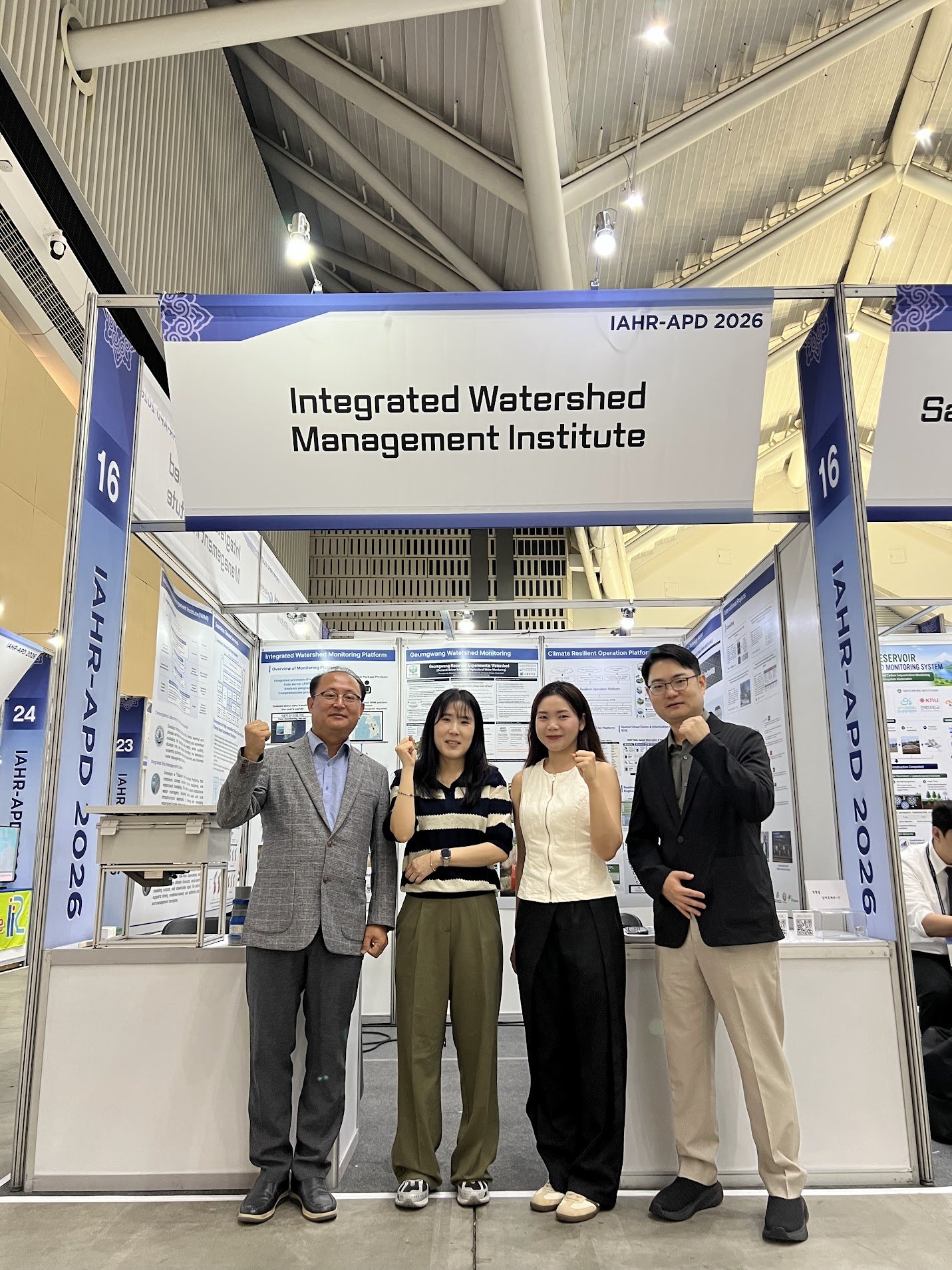
At booth 16 we presented the Integrated Watershed Monitoring Platform (IWMP). Sensors, data server and analysis tools come as one package, so a user can receive field data directly without standing up a separate server or software stack of their own.
Next to it we showed our Seamless Climate Services system, which connects observations, sub-seasonal and seasonal forecasts and long-term climate projections in a single chain — together with the analysis packages our researchers have built around it: ObsGrid, SQMGrid, NMME, SForecast, S2S, rSWAT and LANDISCC. Visitors were especially interested in how downscaled climate data feeds impact assessment for drought, pests and forest change.
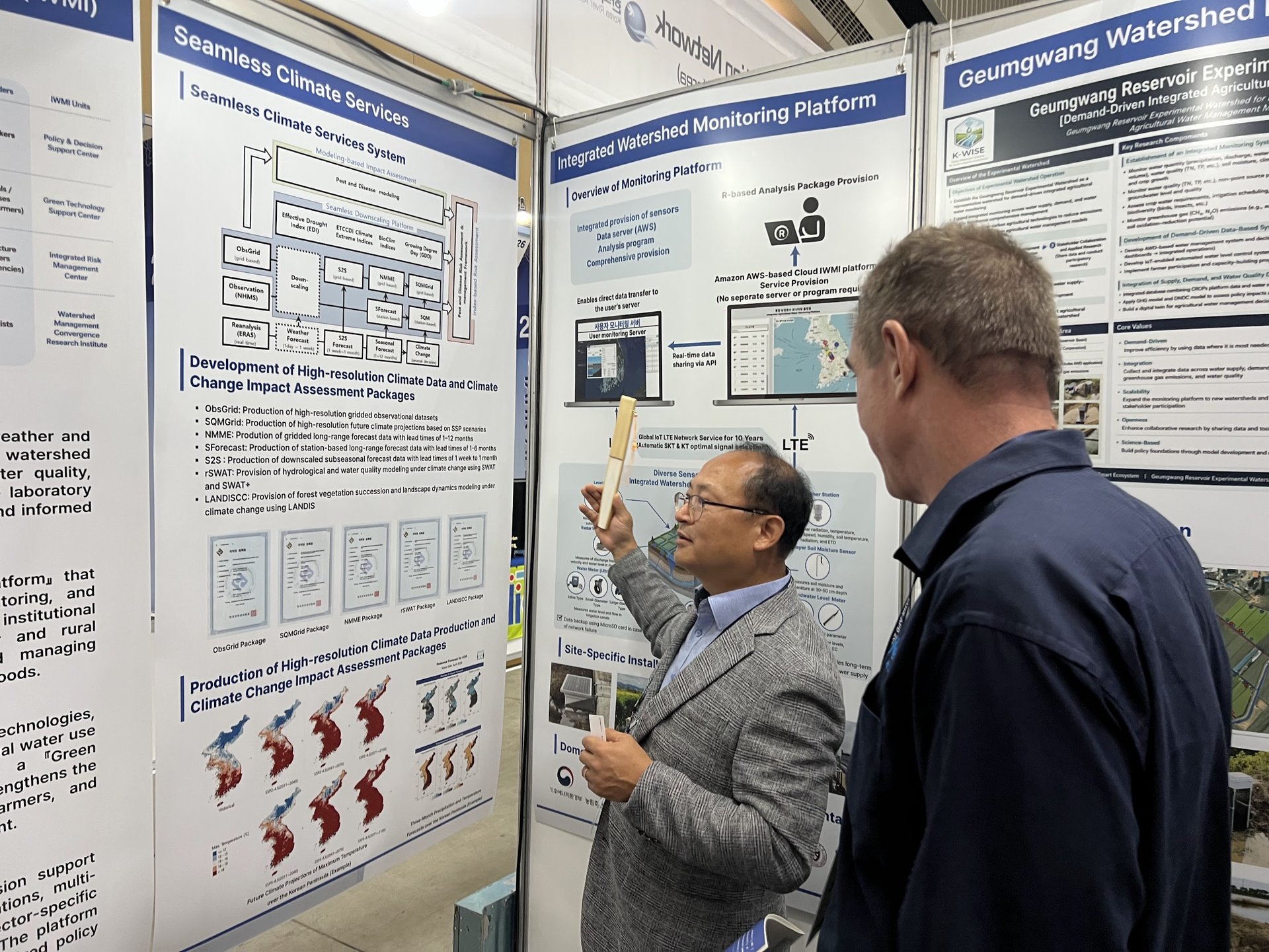
We also displayed the Geumgwang Reservoir Experimental Watershed, where demand-driven agricultural water management is tested in the field, and the Climate Resilience Operation Platform (CROP), which turns climate information into decision support. Shown side by side, they trace one continuous line from monitoring to modelling to decisions.
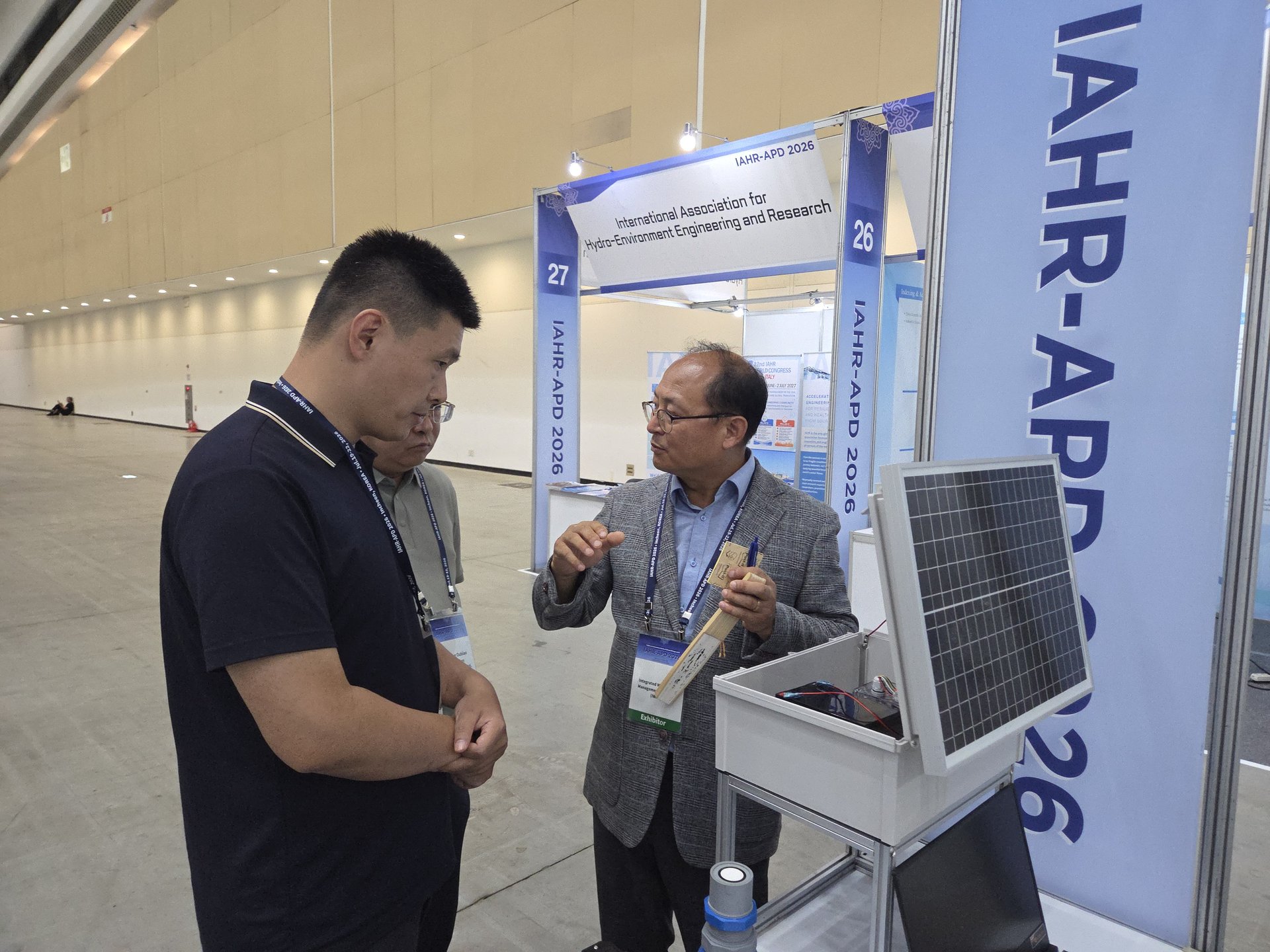
A working set of solar-powered field equipment sat in the booth as well. It keeps measuring water level and flow where there is no mains electricity and sends the data over the mobile network — and that is what delegates asked about most: installation conditions, power budget, and what maintenance really looks like.
We left with a clear takeaway: across the Asia-Pacific, the hard part is no longer collecting data but connecting it to decisions. If you are working on watershed monitoring or climate services in the region, we would be glad to compare notes.
Thank you to everyone who stopped by our booth.